
Loading...
Serving Melbourne, FL and surrounding areas. (321) 326-1433
Slopes washing out after every storm? We build concrete retaining walls in Melbourne with proper drainage and rebar reinforcement - designed to last through decades of Florida weather.
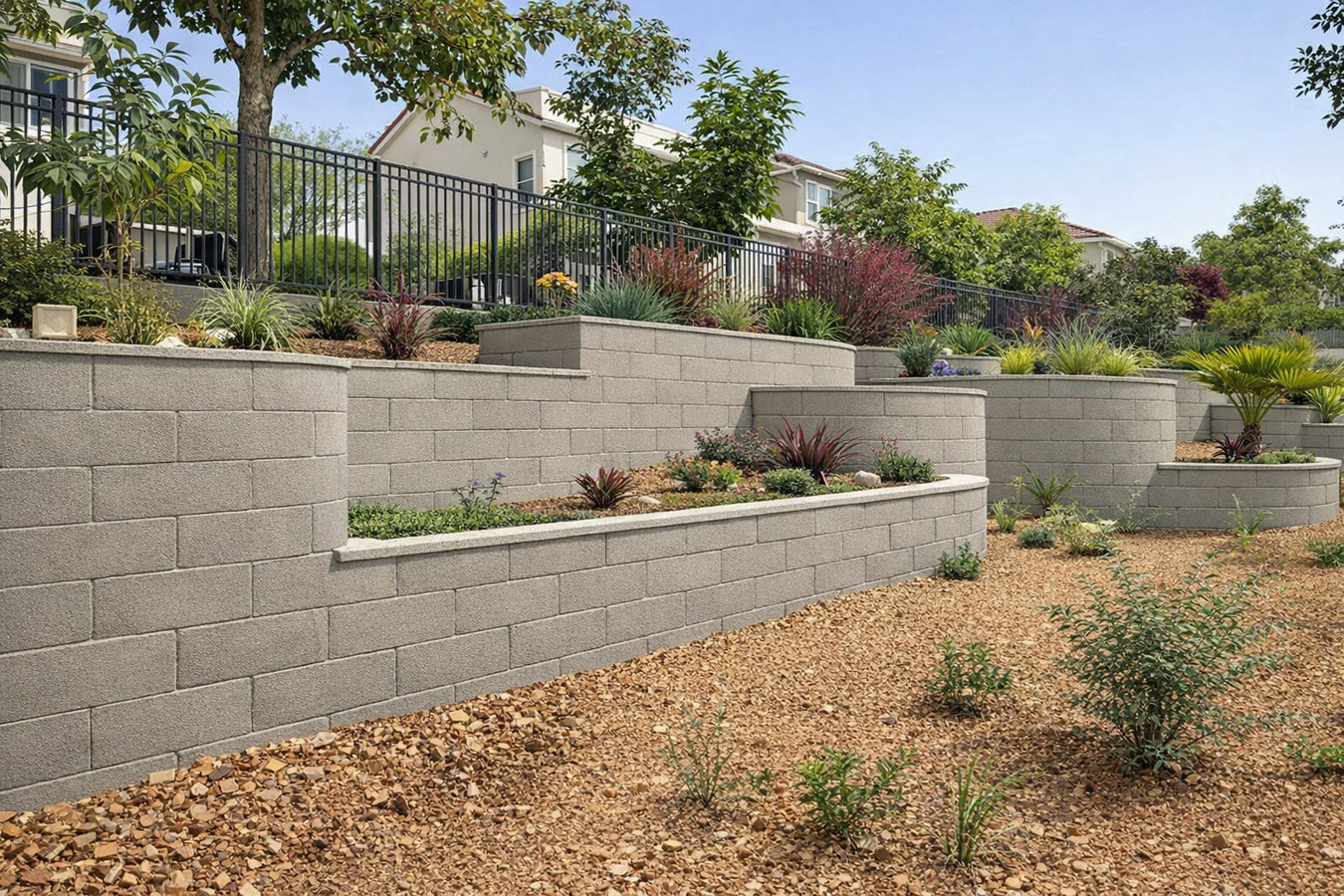
Concrete retaining walls in Melbourne, FL involve excavating a footing, installing steel reinforcement and drainage behind the wall as it is built, pouring the concrete, and letting it cure before backfilling - most residential projects take two to five days of active construction, plus one to two weeks for permits and curing time.
If your yard has a slope that keeps losing ground after summer storms, a properly built retaining wall stops the cycle. Melbourne sits on sandy coastal soil that erodes faster than most homeowners expect - which is why drainage behind the wall is not optional, it is the part that determines whether the wall lasts five years or fifty. We design every wall with Melbourne's rainfall in mind.
Retaining walls often work together with other concrete projects. Homeowners who are managing a sloped yard sometimes also need concrete floor installation in a garage or patio area - and doing both projects at the same time keeps mobilization costs down.
After Melbourne's summer storms, if you notice soil, mulch, or gravel migrating downhill and collecting at the base of a slope or against your driveway, that is erosion in progress. Left alone, it will keep getting worse with each rainy season - and eventually it can undermine a fence, a driveway edge, or even a corner of your foundation.
Sandy Florida soil does not hold a slope the way denser soil does. If a grassy or planted slope is starting to show bare dirt, developing ruts, or visibly shifting after heavy rain, the ground is telling you it needs support. A retaining wall stops that process before it becomes a much bigger repair.
If you have an older timber, block, or concrete wall that is starting to tilt forward, crack horizontally, or show gaps at the base, it is losing the battle against the soil pressure behind it. A leaning wall does not fix itself - it continues to move until it fails, and the cleanup afterward is more disruptive and expensive than replacing it proactively.
If you notice standing water collecting near your foundation after storms - especially on the side of the house where the yard slopes toward the house - that is a drainage problem a retaining wall combined with proper grading can help solve. In Melbourne's wet season, repeated saturation of this kind can lead to foundation issues over time.
We build poured concrete retaining walls for residential properties throughout Melbourne and Brevard County. Every wall includes steel rebar reinforcement inside the concrete and a gravel-and-pipe drainage system behind it - these are not upgrades, they are standard on every project. We handle permits, excavation, and the final city inspection so you do not have to coordinate with the building department yourself.
For homeowners whose projects involve structural foundations - such as adding a wall to support a raised patio or level a yard near a structure - we also offer concrete footings to ensure the base is engineered correctly for the load it will carry. A well-designed footing under a retaining wall is what keeps the wall plumb and stable through Melbourne's wet and dry seasons.
Best for homeowners who want maximum durability and a wall that can handle significant soil pressure and height.
Suits homeowners who want a functional wall that also looks good - stamped or textured finishes are available on request.
A good fit for any Melbourne property with slope erosion, high water table concerns, or drainage problems after storms.
Ideal for homeowners who want the permit process, inspection coordination, and paperwork handled without having to visit the city building department.
Melbourne receives roughly 55 inches of rain per year, with the heaviest rainfall packed into June through September. A slope that looks stable in spring can lose significant ground after a single summer storm season. Sandy coastal soil - which makes up most of Brevard County - has very low natural cohesion, meaning it erodes and shifts faster than denser soils found elsewhere. A wall built without drainage designed for this rainfall volume and soil type is not a long-term fix - it is a temporary one. The Federal Highway Administration publishes guidance on retaining wall drainage requirements that reflects the engineering principles we follow on every Melbourne project.
Homeowners in West Melbourne and Rockledge often face HOA rules that govern wall height, materials, and appearance in addition to city permit requirements. We are familiar with how these planned communities handle approvals - we can help you understand what to check with your HOA before any work begins, so you do not end up with a wall that passes inspection but violates your association's rules.
We ask a few quick questions about your slope and drainage situation, then schedule a free on-site visit within one business day. A photo is not enough to price this kind of work accurately - we need to see the soil, the grade change, and how water currently moves through your yard.
For walls over a certain height, we apply for the required City of Melbourne building permit on your behalf. You do not have to visit the building department. Permit processing typically takes one to two weeks, and we coordinate the final inspection once the wall is complete.
The crew excavates the footing area, sets steel reinforcement inside the form, and pours the concrete. Gravel backfill and a drainage pipe are installed behind the wall as it goes up - this drainage is what protects the wall through Melbourne's wet summers. Construction typically takes two to five days.
Fresh concrete needs about a week to reach enough strength for backfilling. Once cured and inspected, we backfill behind the wall, clean up the work area, and walk through the finished project with you. You keep the passed inspection documentation for your home records.
We respond within one business day. No pressure, no obligation - just a straight answer about what your project needs and what it will cost.
(321) 326-1433Every retaining wall we build includes gravel backfill and a drainage pipe calibrated for Melbourne's rainfall - roughly 55 inches per year concentrated in summer storms. A wall without this drainage is a wall that will eventually fail. We never skip this step.
We embed rebar inside every concrete retaining wall we pour. The reinforcement dramatically increases the wall's strength and resistance to cracking under soil pressure. You will not see it once the wall is finished, but it is what separates a wall that lasts 40 years from one that starts leaning in five.
We have been building retaining walls across Brevard County since 2019. That means we know the local soil conditions, the City of Melbourne permit process, and how HOA rules work in planned communities near Viera and West Melbourne. Local experience is not a marketing line - it changes how we design and build. Learn more from the American Concrete Institute, which sets the technical standards for concrete construction we follow on every pour.
We pull every required permit through the City of Melbourne Building Department and coordinate the inspection. You get a finished wall with an official record on file - which matters when you sell your home or make an insurance claim down the road.
When you hire a contractor for a retaining wall, you are investing in something that is supposed to hold back thousands of pounds of soil for decades. We build every wall the way we would want our own yard built - with the drainage, reinforcement, and permit documentation that protects the investment long after the crew leaves.
Pour a new concrete floor for a garage, utility room, or addition with proper moisture management built in from the start.
Learn MoreBuild a stable footing for fences, posts, or structures on Melbourne's loose, sandy soil.
Learn MoreMelbourne's summer storms are not getting lighter. The sooner your slope has proper support, the less damage you deal with each year. Reach out now for a free estimate.